Exercise guide
Hip Thrust
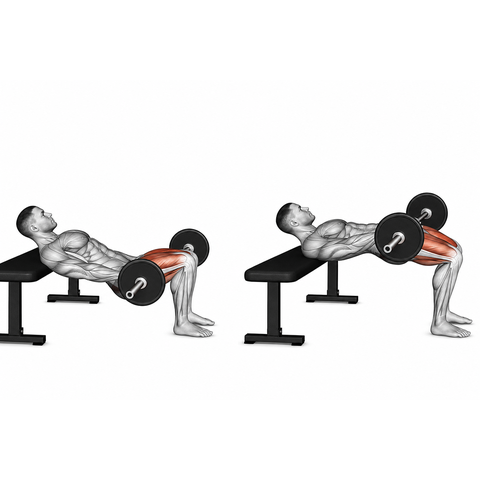
Muscles: glutes · hamstrings
About this exercise
The Hip Thrust is a foundational legs exercise used in strength, hypertrophy, and general fitness programs. It trains glutes, hamstrings through a controlled range of motion with bench, barbell on hips. Consistent practice builds usable strength and muscle quality when technique stays tight.
Most lifters benefit from treating the Hip Thrust as a primary or secondary movement depending on the split. Primary movers include glutes, hamstrings, while stabilizers throughout the trunk and limbs keep the path repeatable. Filming a set from the side often reveals form drift before load becomes too heavy.
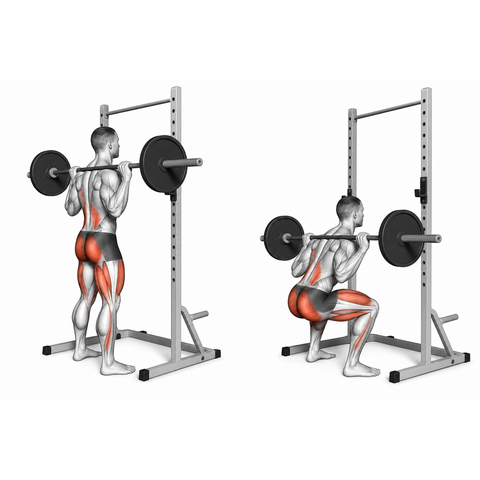
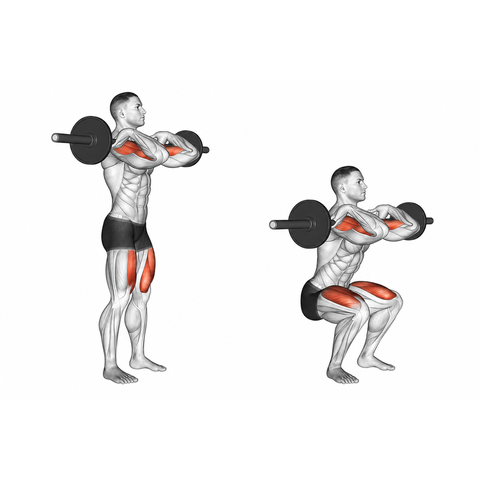
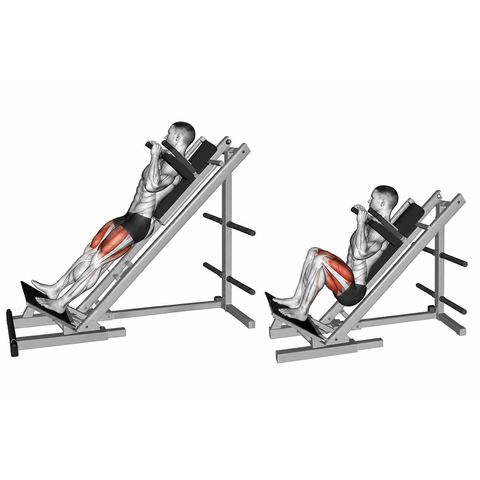
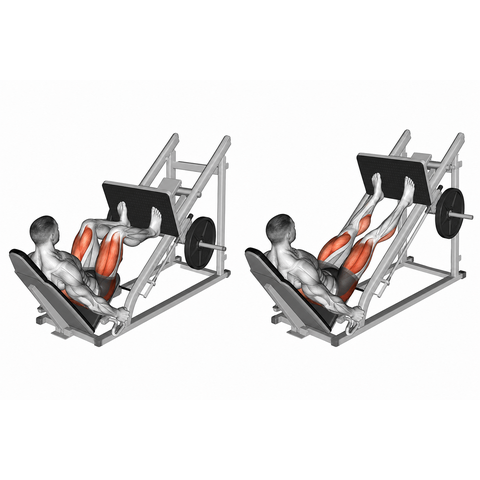
Breathing, tempo, and joint alignment matter as much as the number on the plates. A smooth eccentric, a brief pause where appropriate, and an explosive but controlled concentric reduce injury risk. WhoBigger illustrates the start and finish positions so you can compare your reps to a clear reference.
Use this handbook entry before your working sets: review muscles, steps, and setup, then log each set in a live workout to track weight, reps, and progress over weeks.
Technique
- Set up with bench, barbell on hips and establish a stable base (feet, seat, or grip).
- Move to the start position shown in the illustration—muscles lengthened under control.
- Brace your core; keep shoulders and hips organized for the path of the Hip Thrust.
- Execute the concentric phase without jerking, exhaling where it feels natural.
- Pause briefly in the finish position; feel primary muscles contract.
- Return along the same path for a controlled eccentric (about 2–3 seconds).
- Repeat for planned reps, keeping form identical set to set.
What to watch for
- Keep tension on target muscles—avoid swinging or using momentum.
- Move only through ranges you can control; pain-free joints come first.
- Grip, foot pressure, and eye focus should stay consistent rep to rep.
- Stop the set when form breaks, not only when weight feels heavy.
Choosing weight
- Start conservative: pick a load you can move for 8–12 crisp reps with 2 reps in reserve.
- Increase weight when all sets look identical; add the smallest plate jump that keeps form clean.
- For strength emphasis use heavier sets of 4–6; for hypertrophy stay around 8–15 with controlled tempo.
Did you know?
The Hip Thrust has been refined across decades of strength coaching and appears in modern hypertrophy and athletic programs worldwide.
Train smarter on WhoBigger
Log sets in a live workout
Register free to run guided workouts with rest timers, per-set logging, and history—compare today’s weights to last week in one tap.